At First Steps Learning Center, we’ve integrated the most effective teaching methods with current research on child development to create a well-rounded curriculum that ensures your child’s success both in and out of the classroom.
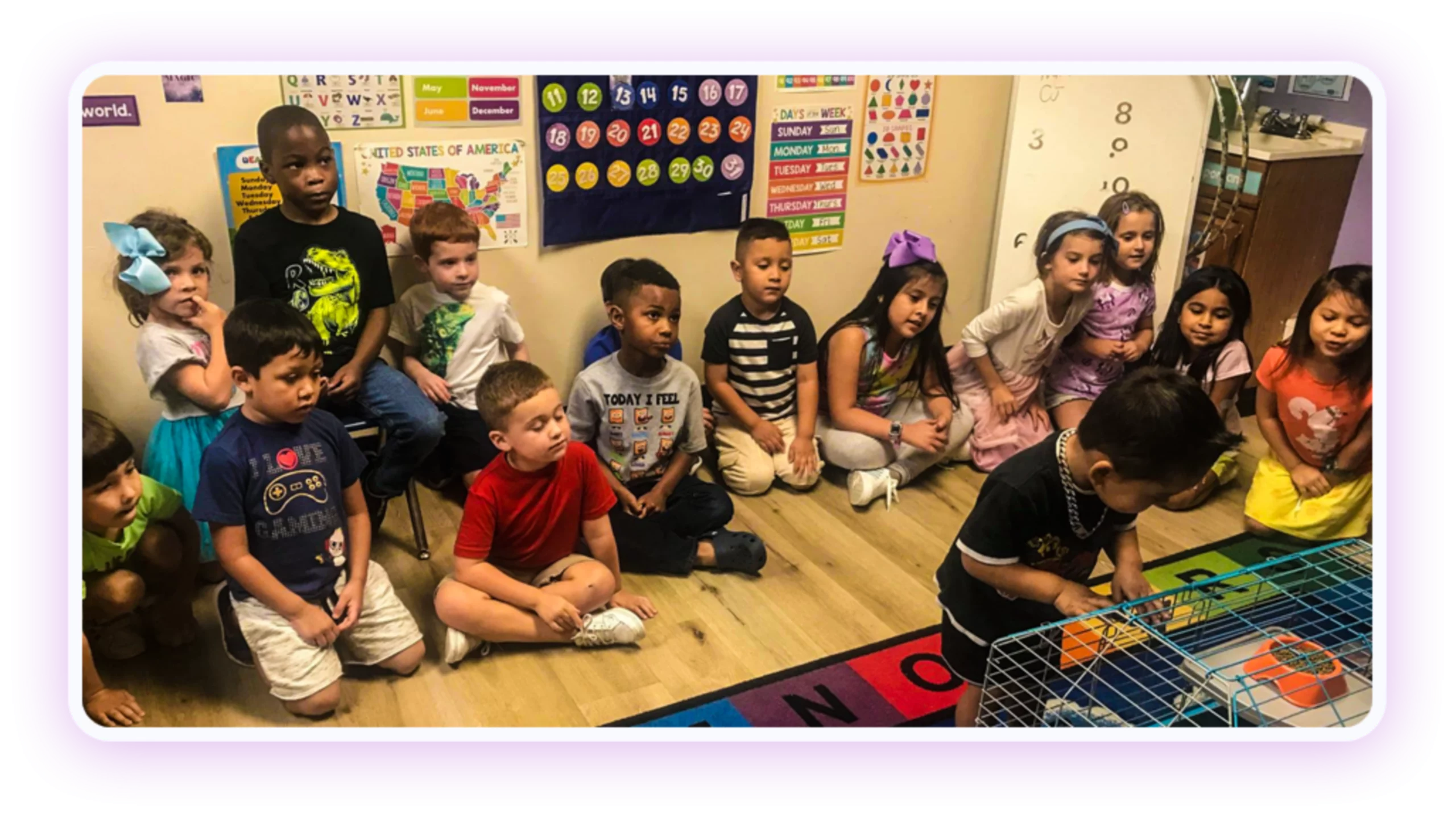
Discover First Steps Learning Center’s Learning Beyond Curriculum, combined with the Reggio Emilia approach to early childhood education.
We are excited to introduce you to our new early learning curriculum from Learning Beyond Paper, Inc. The Learning Beyond (LB) Curriculum is a research-based, classroom-tested curriculum for infants to Pre-K 4. As a social-constructivist curriculum, LB is designed to create learning opportunities for children through peer-based activities and intentional interactions with their teachers. Our teachers will have access to the full curriculum from tablets, providing real-time support for our learners, opportunities for differentiated instruction, and social-emotional development. LB also includes a STEAM (Science, Technology, Engineering, Art, and Math) focus throughout and @HomeConnections Newsletters to keep you informed on everything your child is learning.
Through this concept, our goals for each child include:
Overwhelming appreciation of himself/herself
Building his/her problem-solving skills
A sense of comfort exploring and expressing curiosity
Being able to make choices and being responsible
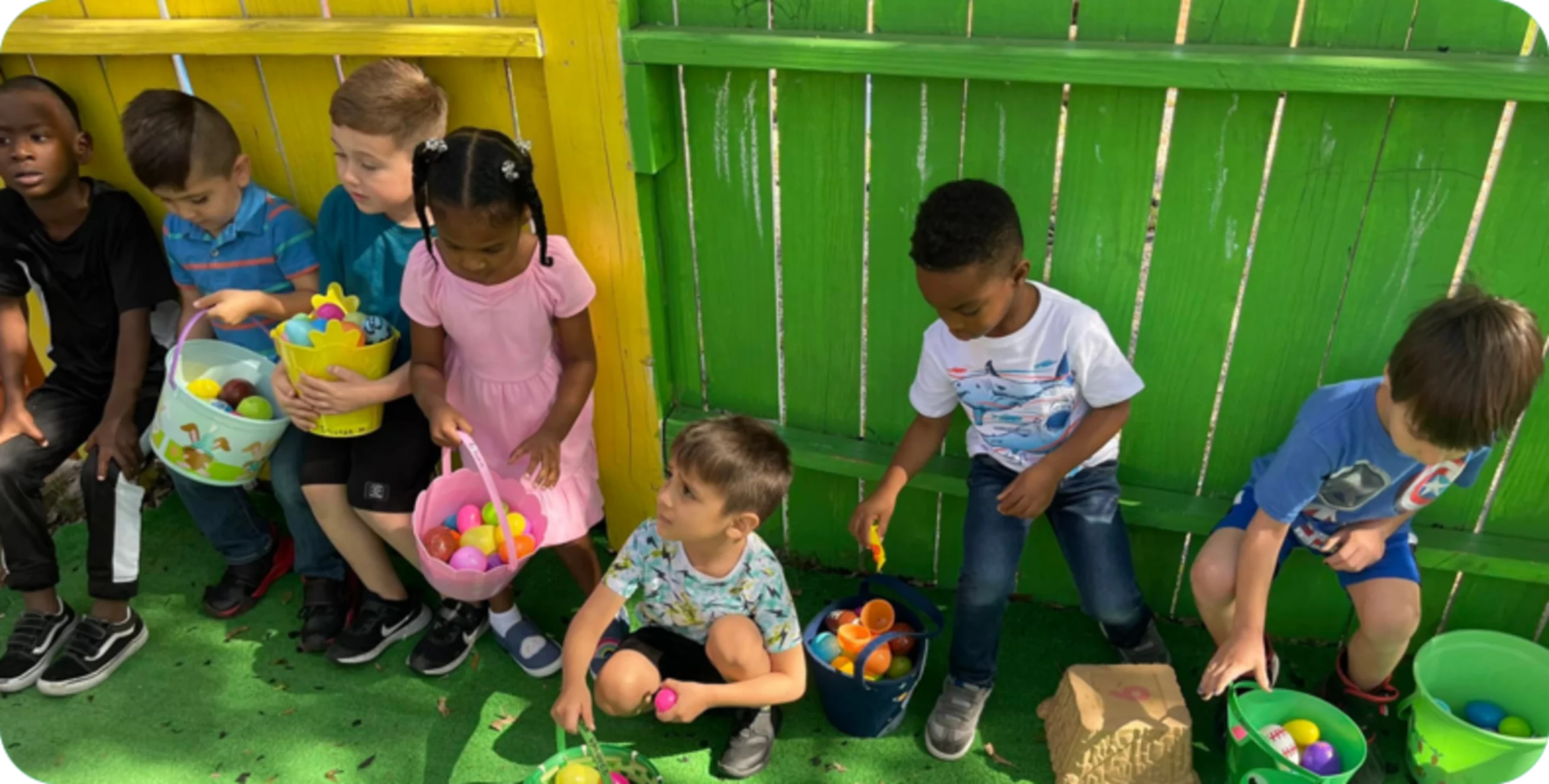
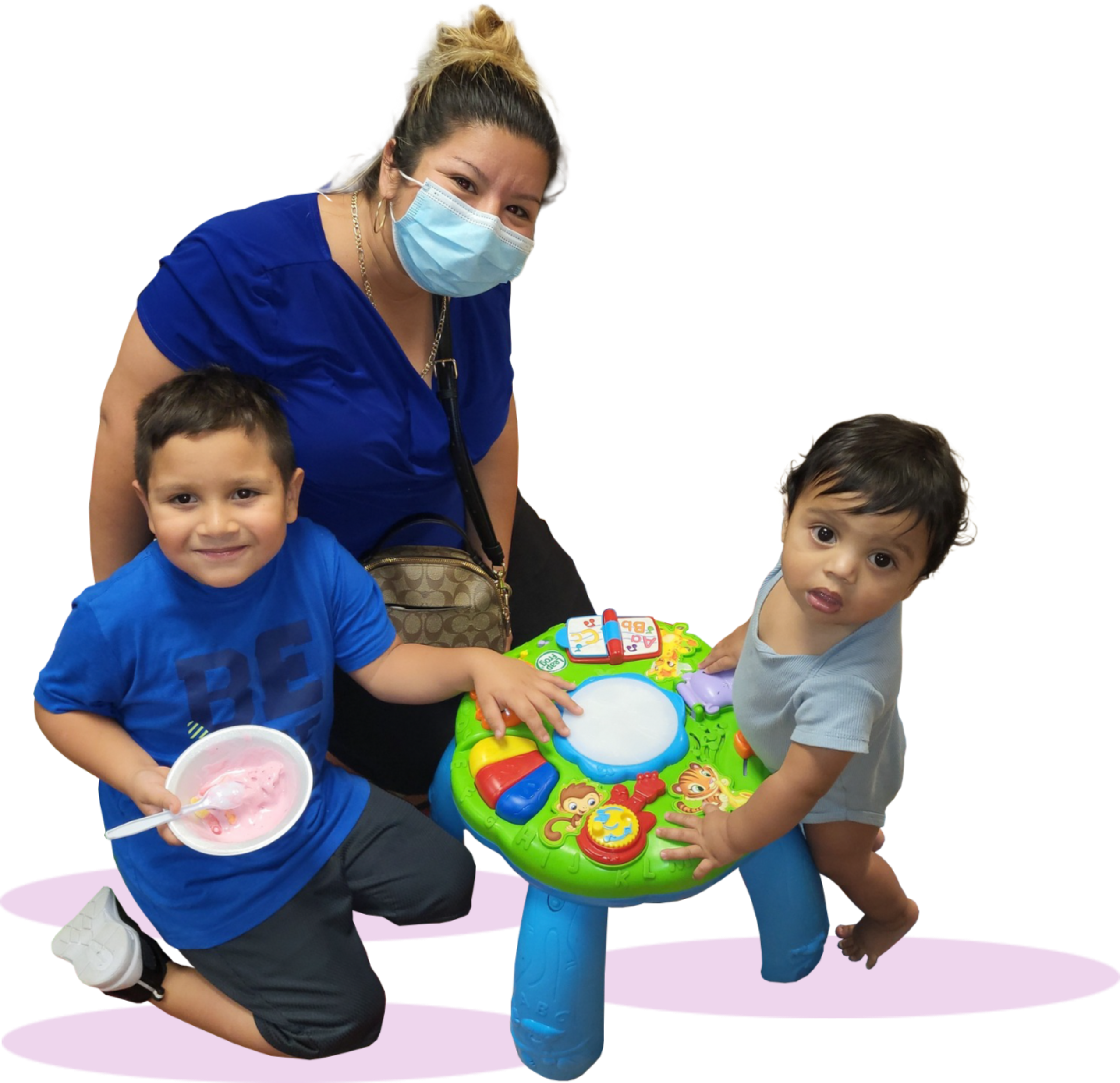
This allows children to focus on one learning area at a time. Some of the skills that children acquire through our program are:
Problem-solving skills
Literacy skills
Physical abilities
Social skills and communication skills
Ability to deal with emotions
Self-help skills
We believe a child’s learning should be guided with their own interest and ideas. By doing so, children will be more interested in the activities provided.
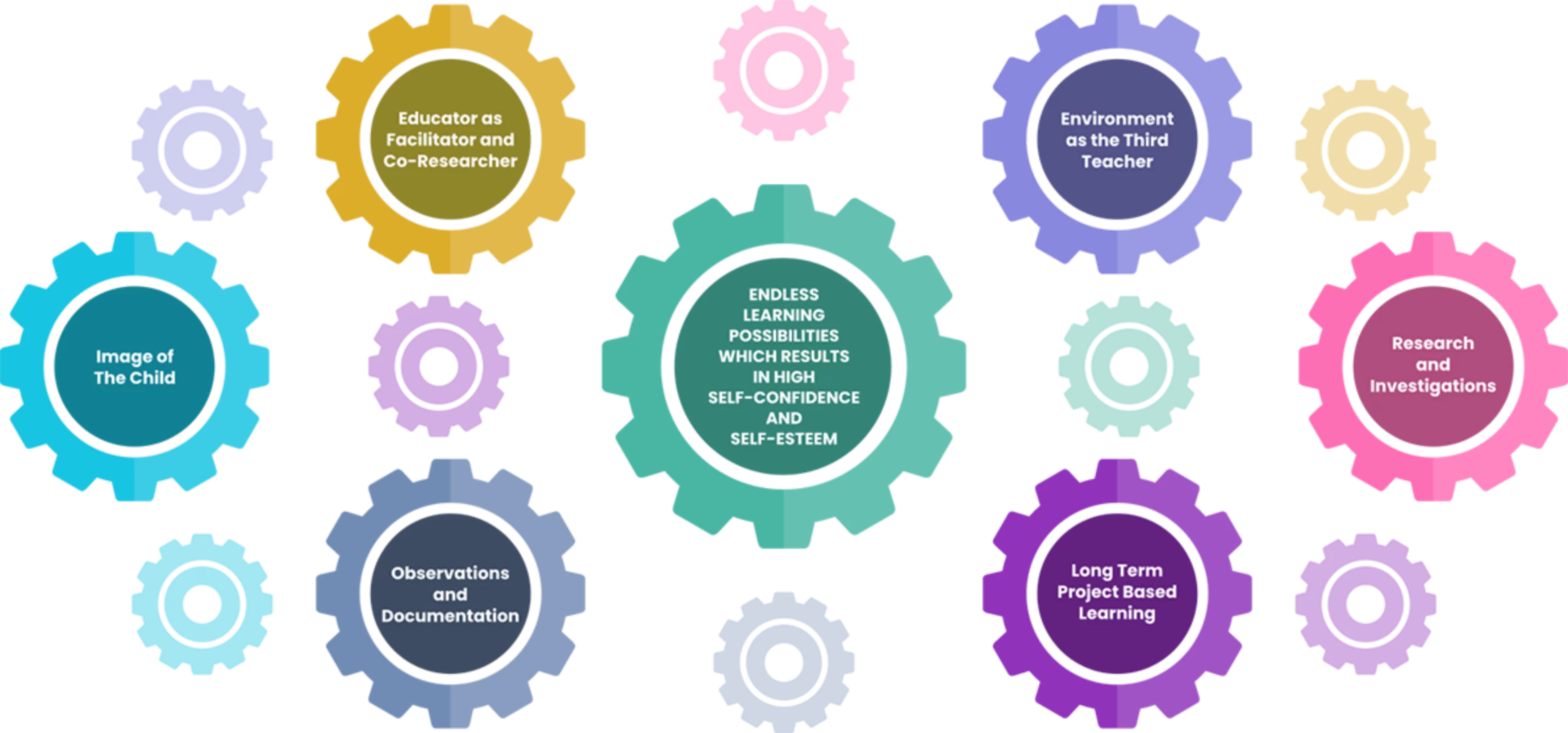
The Reggio Emilia approach to education is committed to the creation of a learning environment that will enhance and facilitate children’s construction of his or her own powers of thinking through the combination of all the expressive, communicative, and cognitive languages. The Reggio Emilia approach is based upon the following principles:
In-depth explorations of concepts and ideas driven by the group's collective interests, fostering curiosity, collaboration, and meaningful learning.
Consistent with Howard Gardner's notation of schooling for multiple intelligences, the Reggio Emilia approach calls for the integration of the graphic arts as tools for cognitive, linguistic, and social development.
Collaborative group work, both large and small, is considered valuable and necessary to advance cognitive development. Children are encouraged to dialogue, critique, compare, negotiate, hypothesize, and problem-solve through group work.
he teacher's role within the Reggio Emilia approach is complex. Working as co-teacher, the teacher is first and foremost to be that learner alongside the children. The teacher is a resource guide as he/she lends expertise to the children. Within such a role, the teacher educators carefully listen, observe, and document children's work and the growth of community in their classroom and are to provoke, construct, and stimulate thinking, and children's coloration with peers. Teachers are committed to reflection about their own teaching and learning.
Similar to the portfolio approach, documentation of children's work in progress is viewed as an important tool in the learning process for children, teachers, and parents. Pictures of children engaged in experiences, their words as they discuss what they are doing, feeling, and thinking, and children's interpretation of experiences through the visual media are displayed as a graphic presentation of the dynamics of learning. Documentation is used as assessment and advocacy of learning.
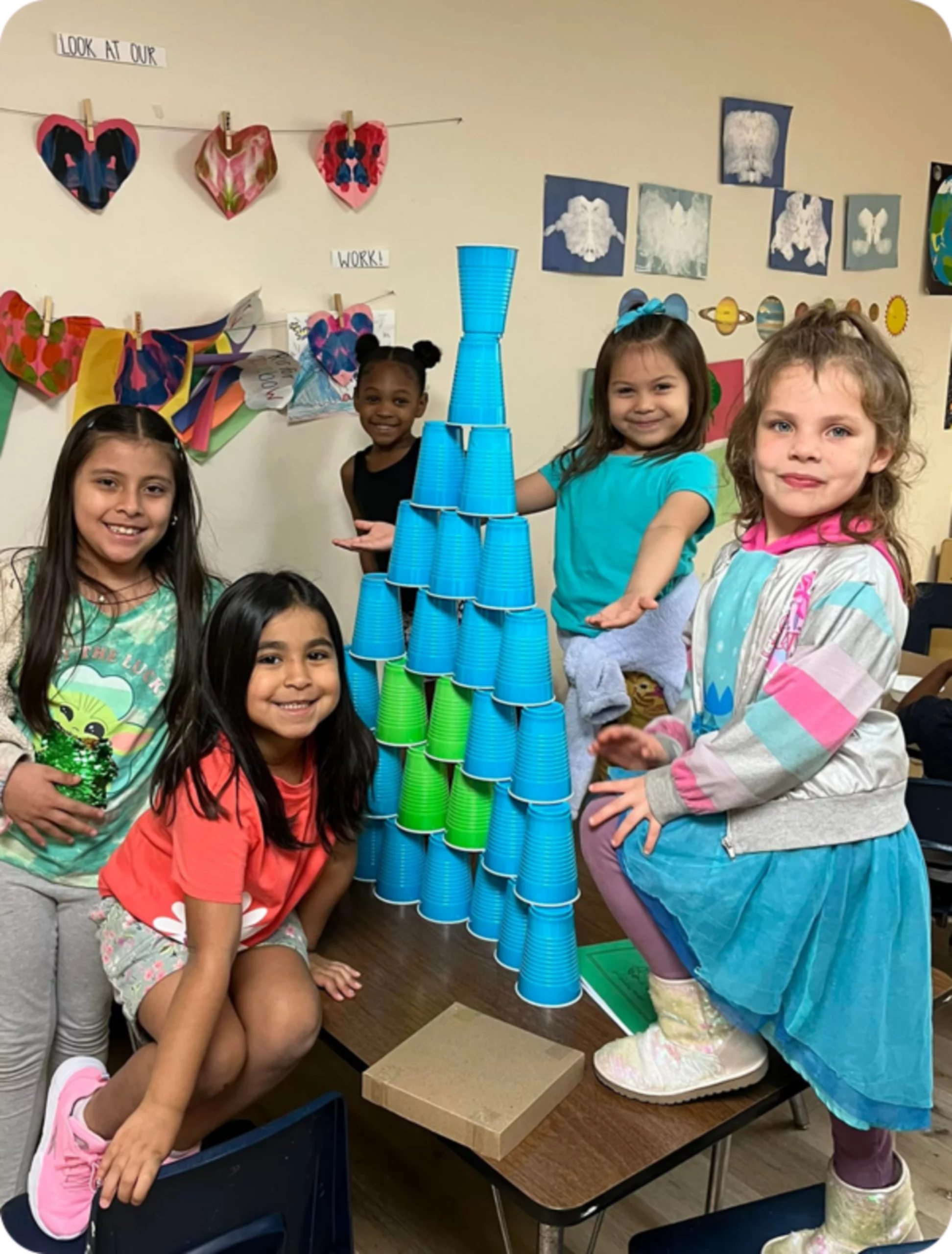


We help children develop empathy, resilience, and positive relationships. Through guided play, they learn teamwork and emotional regulation. This builds confidence in navigating various social settings.

First Steps Learning Center reinforces early literacy skills through conversation, storytelling, and letter recognition. We use a variety of interactive activities to promote a love for reading and writing.
Young children are natural learners. They explore, discover, and ask questions about the world around them. Our curriculum creates opportunities for hands-on experiences and critical thinking.

Our childcare center provides a safe and stimulating environment for children to develop their gross and fine motor skills. Through play, we help them gain strength, balance, coordination, and control.

We believe in the importance of language development and communication skills. Our curriculum includes plenty of activities that promote vocabulary, listening, speaking, and writing skills.

Through age-appropriate activities, we teach math concepts to young children in fun and engaging ways. This includes counting, number recognition, patterns, addition, subtraction, and more.

We encourage children to express their creativity and use their imagination through various forms of art. This helps develop fine motor skills, self-expression, and problem-solving abilities.
As a multicultural childcare center, we embrace diversity and offer Spanish lessons to our students. This not only teaches them a new language but also helps them appreciate different cultures.

Our curriculum includes hands-on experiences that allow children to explore the natural world and engage in scientific inquiry. This promotes a sense of wonder, curiosity, and critical thinking skills.
Our curriculum is built on the Reggio Emilia approach to early childhood education and is integrated with our Learning Beyond Curriculum philosophy. This approach emphasizes child-led exploration, collaborative learning, and the development of multiple intelligences. By allowing children to guide their own learning based on their interests, we create a stimulating environment that nurtures curiosity, creativity, and critical thinking.
The Reggio Emilia approach recognizes that children are natural learners and encourages them to explore, discover, and ask questions about the world around them. By following their interests and ideas, children become more engaged and motivated to learn. This approach also values the importance of collaboration, communication, and documentation in a child’s learning journey.
We understand that every child is unique, and we strive to cater to different learning styles through various teaching methods. Whether your child learns best through storytelling, visual aids, hands-on activities, or group collaboration, our diverse curriculum allows for individualized learning experiences. “No child left behind” is a core principle of our curriculum, and we are committed to helping each child reach their full potential.
Depending on the child’s age and developmental level, parents can expect to see a mix of free play, guided learning activities, outdoor playtime, and group interactions. Children will also have opportunities for creative expression through art and music. Our curriculum is designed to be stimulating, engaging, and fun-filled for young children.
We use ongoing observation and documentation of a child’s work and play to track their progress. Our teachers closely observe children as they engage in activities, take note of their interests, and record significant moments through photographs, videos, and written notes. We maintain constant and open communication with parents to discuss their child’s progress and share any concerns or milestones.


 Trustindex verifies that the original source of the review is Google.
 Trustindex verifies that the original source of the review is Google.
 Trustindex verifies that the original source of the review is Google.
 Trustindex verifies that the original source of the review is Google.
 Trustindex verifies that the original source of the review is Google.
 Trustindex verifies that the original source of the review is Google.
 Trustindex verifies that the original source of the review is Google.
 Trustindex verifies that the original source of the review is Google.